If you've driven across the causeway on Whangapoua Road, you may have noticed the "Slow for Bittern" signs at each end. They have been there for five years, and they are there for a very good reason.
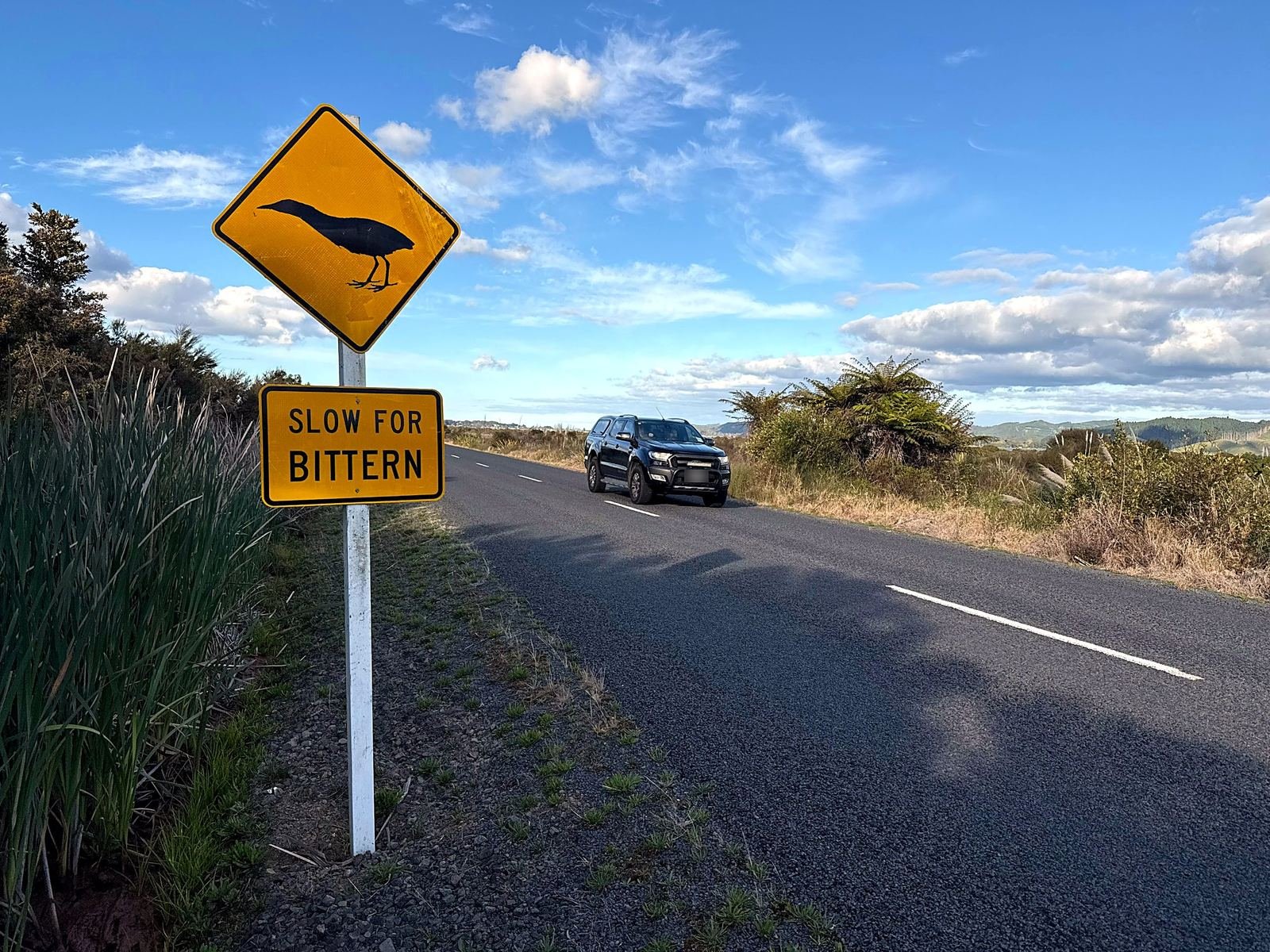
One of the two Slow for Bittern signs on the causeway. The road runs right through bittern habitat.
The road runs straight through the middle of the wetlands that are home to our Australasian bittern, or matuku-hūrepo. These birds feed in the mangroves, salt marsh and swamp right beside the road.
Bitterns are big birds, but they fly low and slow – often just two or three metres above the ground. When a car approaches, its natural response is to freeze, which makes it vulnerable to being hit. Or it may be startled into the air and straight into its path. At other times, a bird simply finishes feeding and flies across the road, unaware of the traffic.
"That's often when they get hit by vehicles," says trust volunteer Hamish. He knows of several bitterns that have been killed by vehicles on the roads around Whangapoua Harbour.
That might not sound like many, but bitterns are Nationally Critical. Our recent listening surveys picked up only three booming males around the harbour. With so few birds, every single one matters.
The causeway is also one of the few straight stretches on our steep, winding roads. "People come off the windy hills, get on the straight and put their foot to the floor," says Hamish. His message is simple: ease off the accelerator, so you can react if a bird freezes or flies across.
Bitterns aren't the only birds at risk. We regularly find pūkeko hit by cars, and we have also found dead banded rail – a shy, secretive swamp bird classed as at risk.
So next time you cross the causeway, slow down and give our wetland birds the space to cross safely.