Guest post by Hamish at Flightworks
You may have noticed the "Slow for Bittern" signs on the roads into Matarangi, Whangapoua and Otama. Here's why these remarkable birds need our help.
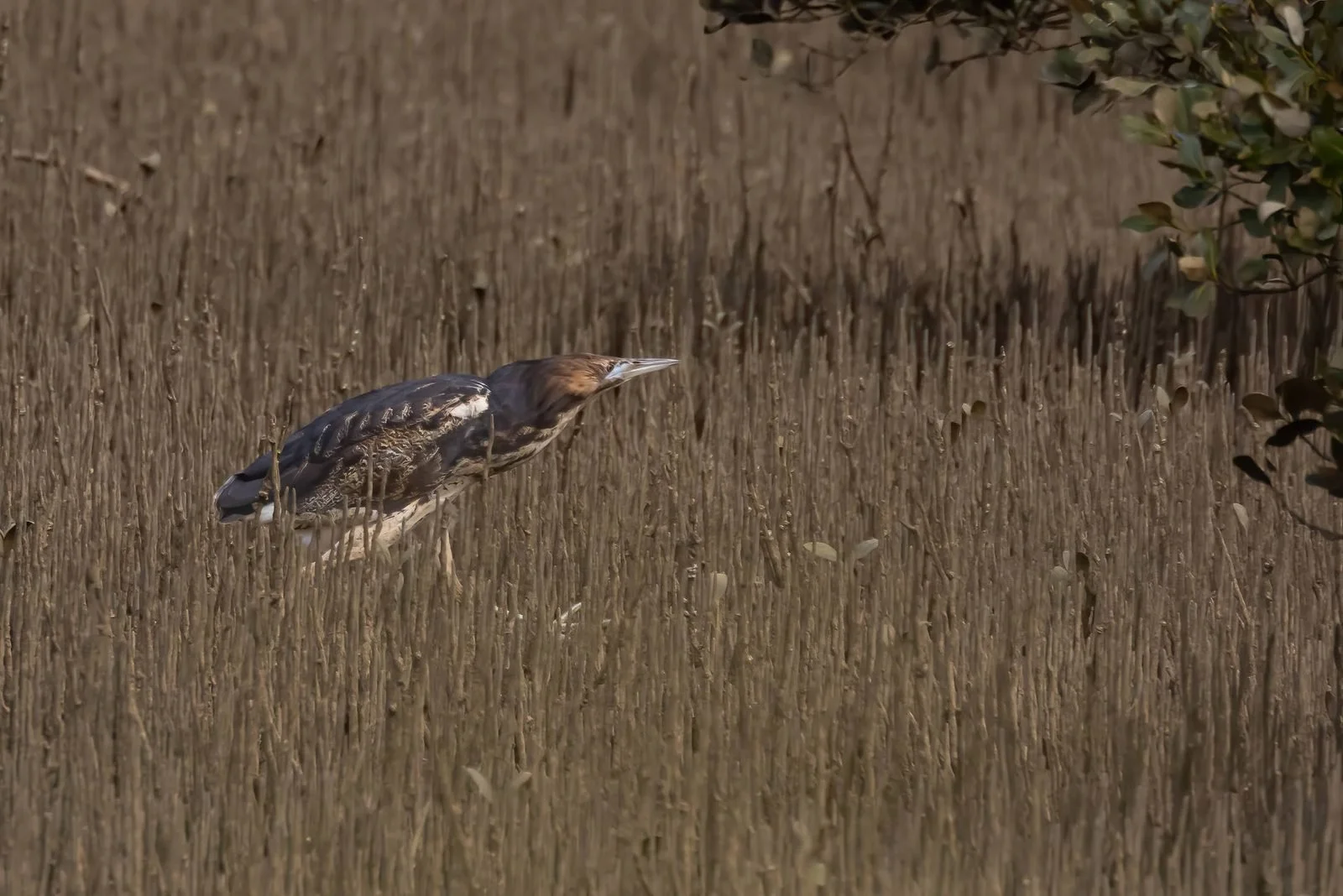
A matuku-hūrepo hunting among the mangroves. Photo: Michelle Martin, Wander Wild.
The Australasian bittern, or matuku-hūrepo, is a wetland bird found in New Zealand, Australia and New Caledonia. In New Zealand it is classed as Nationally Critical, with fewer than 1,000 birds thought to remain. That's the same threat category as kākāpō and takahē – the only step beyond it is extinction.
Bittern are masters of camouflage and rarely seen, which makes it hard to know how many there are. So a nationwide listening survey, the Matuku Muster, was set up. Every spring, volunteers spend an hour at dawn or dusk near wetlands, counting the males that "boom" to attract a mate. The females stay quiet.
The Coromandel survey is organised by the Predator Free Hauraki Coromandel Community Trust. Whangapoua Harbour is a bittern hotspot on the peninsula, with a good mix of nesting and feeding habitat. In spring 2024, 15 volunteers coordinated their listening times so no bird was counted twice. They heard seven or eight males in the wetlands around the harbour.
Females are generally far fewer, and recent Department of Conservation work with thermal drones has found very few nests. That's a real concern, because young birds are critical to keeping the population from sliding towards extinction.
Bittern face a long list of threats: predators such as mustelids, pigs, harrier hawks, cats and dogs; a lack of food in wetlands; being hit by cars; electrocution on powerlines, thanks to their wide wingspan; and the ongoing loss of wetland habitat.
Want to know more? Read "The grief bird" in New Zealand Geographic, and see Michelle Martin's photos and notes on the bittern at Wander Wild.